

Hildene, The Lincoln Family Home
1005 Hildene Road
Manchester, VT 05254
(800) 578-1788
(802) 362-1788
Hours of Operation: Thursdays through Mondays, year-round (except for some holidays), 10:00 AM to 4:30 PM (Closed to the public on Tuesdays and Wednesdays). Check website for details and directions.
Hildene is a 412-acre Georgian Revival estate designed by Shepley, Rutan, and Coolidge of Boston, Massachusetts, and built at the direction of Robert Todd Lincoln, the eldest of the four sons of President Abraham Lincoln and his wife, Mary Todd Lincoln. Completed in 1905, it remained occupied by descendants of the Lincoln family until 1975 when Mary Lincoln Beckwith passed away—the last descendant of the Lincoln-Harlan family.
Hildene was registered on the National Register of Historic Places in 1977. (link)
Robert Todd Lincoln became President of the Pullman Company in 1897, after the death of company founder George Pullman. The Pullman Company was at the time the largest manufacturing company in the world, and commanded the market for railroad sleeper cars for overnight passenger service.
On the grounds of Hildene is a fully-restored 1903 Pullman Palace Car, named “Sunbeam”, accompanied by a special exhibit entitled, “Many Voices”.

George Pullman developed the sleeping car bearing his name into the 1980s, but the Pullman Company did not just manufacture the cars. It also operated them on most of the railroads in the United States, paying railroad companies to couple the cars to trains. At the company’s peak in the early 20th century, its cars accommodated 26 million people a year.
Listen to an audio story produced by multimedia artist Shanta Lee about this site, “Sunbeam and the Pullman Porters“.
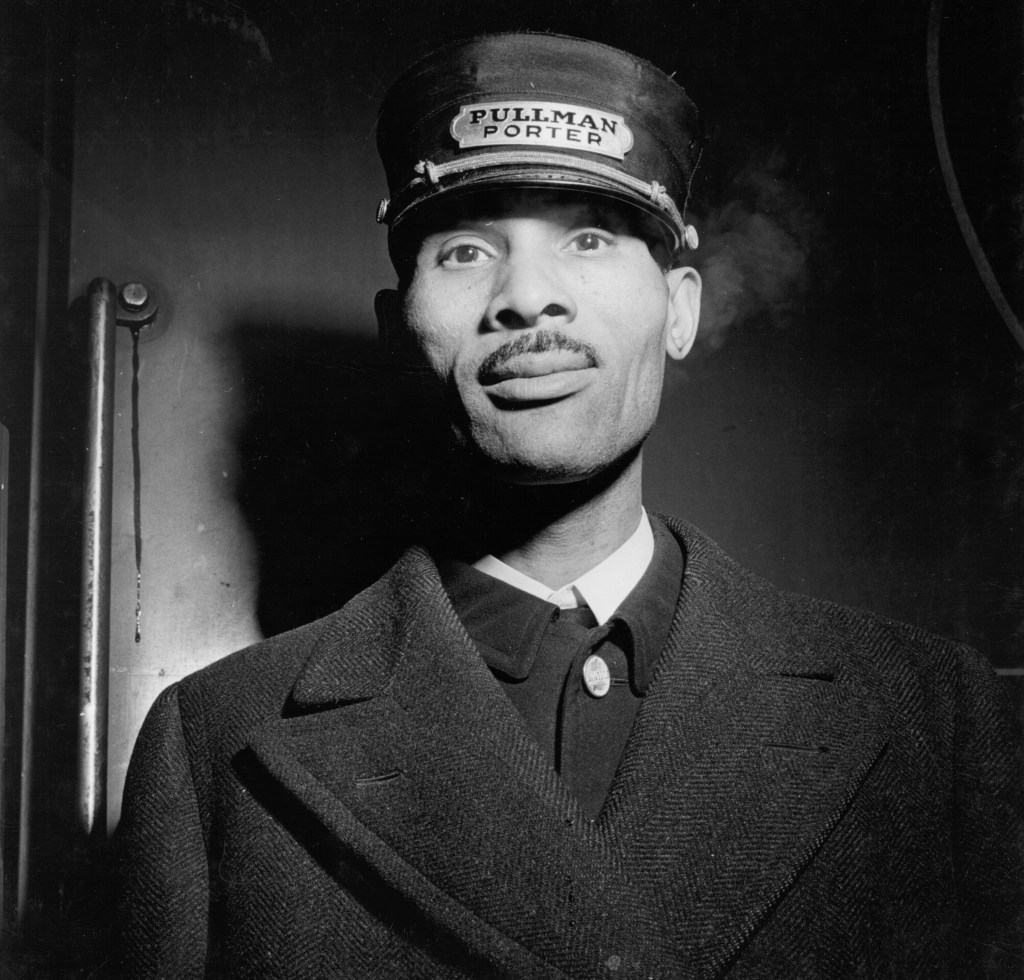
In the 1920s and 1930s, the Pullman Company was one of the largest single employers of Black people and had created an image for itself of enlightened benevolence via financial support for Black churches, newspapers, and other organizations. It also paid many porters well enough to have a middle-income lifestyle and prominence within their own communities.
Working for the Pullman Company was, however, less glamorous than the image the company promoted. Porters depended on tips for much of their income and thus on the generosity of white passengers, who often referred to all porters as “George”—the first name of the company’s founder.
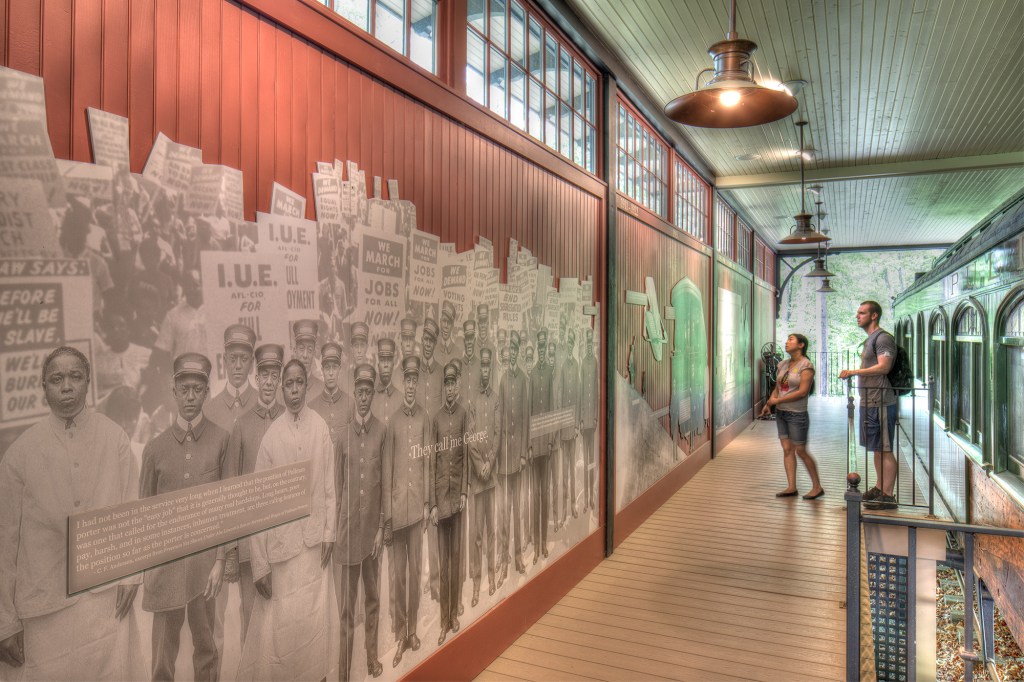
The Many Voices exhibit is a powerful, profound, and sometimes difficult look at the paradox of the Pullman porters. While a job as a porter was perceived by those in the Black community as one of prestige, the porters themselves knew that it was arduous work with long hours and low pay.
In spite of the working conditions, and perhaps inadvertently, the Pullman Company helped to give rise to the Black middle class. Porters broadened their worldly knowledge by reading newspapers and books left behind on the train cars. Because they were now travelling around the country, they were able to establish a national network of communication amongst African Americans. They also observed and emulated the mannerisms, dress and aspirations of the wealthy Pullman clientele. In short, they saw the possibilities, and they saw the inequities.
The story of the Pullman porters, including their 100-year journey from being freed slaves in 1863, to the March on Washington as civil rights activists in 1963, is one that is not well-known. It is one, however, that gives us the opportunity to begin sometimes difficult conversations with people from all walks of life across this country and from around the world. It is a story that has important lessons for today.
 vtaaht.org
